
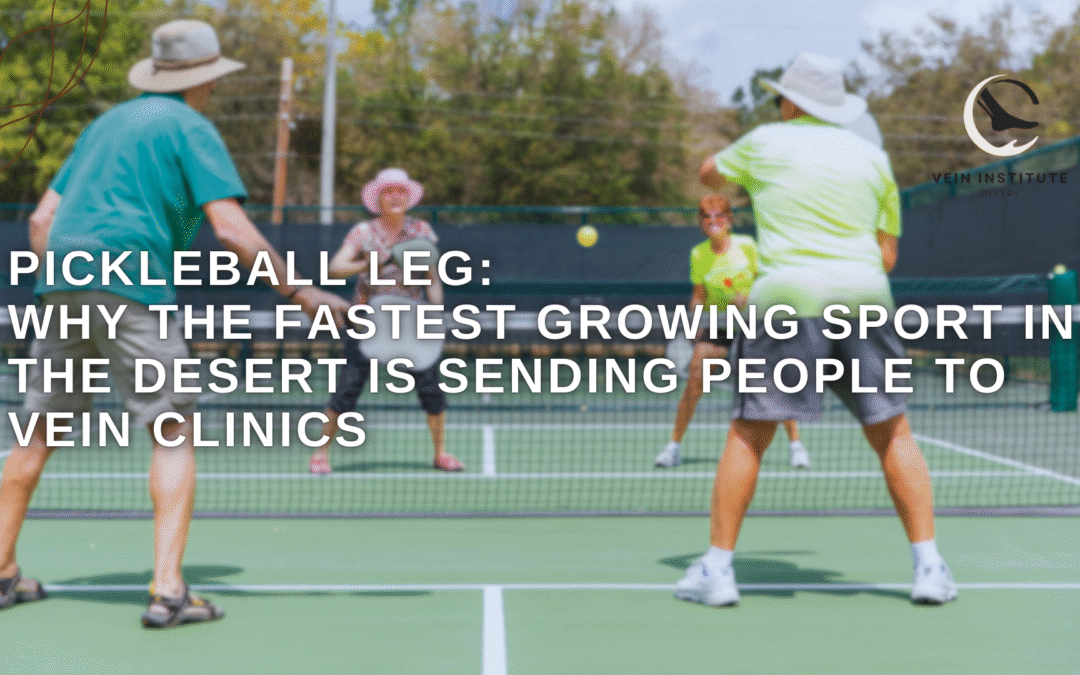
Pickleball Leg: Vein Risks in Desert Sports 🏓🌵
Pickleball courts across Palm Desert are full from sunrise to sunset. It is fast, social, and deceptively demanding. Many of my patients in their 40s, 50s, and 60s take up the sport believing it is gentler than tennis. Yet I am seeing a steady rise in what athletes casually call “pickleball leg” — persistent calf tightness, swelling, visible vein changes, and unexplained heaviness after play.
As a phlebologist with decades of experience treating venous disease, I can say confidently that rapid lateral movements, abrupt stops, and desert heat create the perfect environment for vein strain.
Pickleball Leg: Vein Risks in Desert Sports and Circulatory Stress 🔬
Pickleball demands explosive side steps and quick pivots. Each movement activates the calf muscle pump, which normally assists veins in pushing blood back toward the heart. In healthy veins, this system works efficiently. But when venous valves are already weakened — due to age, genetics, or prior vein disease — repetitive strain can expose underlying insufficiency.
In hot desert climates, superficial veins dilate. Heat relaxes vessel walls, increasing pooling in the lower legs. Add dehydration, and blood becomes more viscous, further challenging venous return.
Over time, players may notice:
• Post-game ankle swelling
• Prominent or bulging veins
• Calf aching that lingers overnight
• A sensation of heaviness unrelated to muscle soreness
This is not always a muscle injury. It can be venous hypertension triggered by repetitive stress.
Why Active Adults Over 40 Are Vulnerable 🧠
Many recreational players fall into the 40–60 age range. By this stage of life, vein elasticity naturally declines. Valve leaflets may no longer close tightly. Years of standing, travel, or prior pregnancies (for women) may have already weakened venous structures.
High-impact or stop-and-go sports amplify pressure inside compromised veins. The result is inflammation of the vessel wall and surrounding tissue. Some patients develop superficial thrombophlebitis after intense play, mistaking it initially for a simple strain.
Ignoring symptoms can allow progression to chronic venous insufficiency. Early signs are subtle, but they rarely reverse without intervention.
Distinguishing Muscle Strain from Vein Strain ⚖️
Muscle soreness typically improves within 48–72 hours and responds to stretching. Venous-related discomfort behaves differently.
Consider circulation if:
1️⃣ Swelling increases as the day progresses
2️⃣ Elevating the legs provides noticeable relief
3️⃣ Skin near the ankles darkens over time
4️⃣ Veins become more visible after heat exposure
Venous symptoms often worsen in the evening and improve with compression. Muscle injuries do not follow this pattern.
Recognizing this distinction is critical. Treating a vein issue as a simple sports injury delays appropriate care.
Prevention Strategies for Desert Athletes 🏜️
Prevention does not mean abandoning the sport. It means protecting circulation intelligently.
• Hydrate consistently before and after play
• Warm up calves thoroughly to activate muscle pump function
• Use graduated compression socks during recovery
• Avoid prolonged standing immediately after matches
• Elevate legs for 15–20 minutes post-activity
Compression is particularly beneficial in desert environments where vasodilation increases venous pooling.
Players with known varicose veins should consider periodic vascular evaluations, especially if symptoms escalate.
When to Seek Evaluation 🩺
Persistent swelling, localized warmth, or sudden tenderness along a vein should not be dismissed. Duplex ultrasound can assess valve competence and detect reflux. Early treatment often involves minimally invasive, image-guided procedures that restore efficient blood flow without extended downtime.
Addressing venous dysfunction not only reduces discomfort but also protects long-term mobility. Active lifestyles depend on healthy circulation.
Staying Competitive Without Compromising Vein Health ⚡
Pickleball builds community and cardiovascular fitness. Yet repetitive lateral movement combined with desert heat places measurable stress on the venous system. The growing visibility of Pickleball Leg: Vein Risks in Desert Sports reflects this intersection of activity and physiology.
If your legs feel unusually heavy after matches, if swelling persists into the next day, or if visible veins become more pronounced during the season, consider that the issue may extend beyond muscle fatigue.
Healthy veins are foundational to endurance and recovery. Protecting them ensures that time on the court remains energizing rather than draining.

Andy Sharify
The founder and owner of The Vein Institute of the Desert. He oversees the clinic, ensuring exceptional service and a patient-focused approach to vein care. Andy is dedicated to creating a comfortable and supportive environment for every patient.