
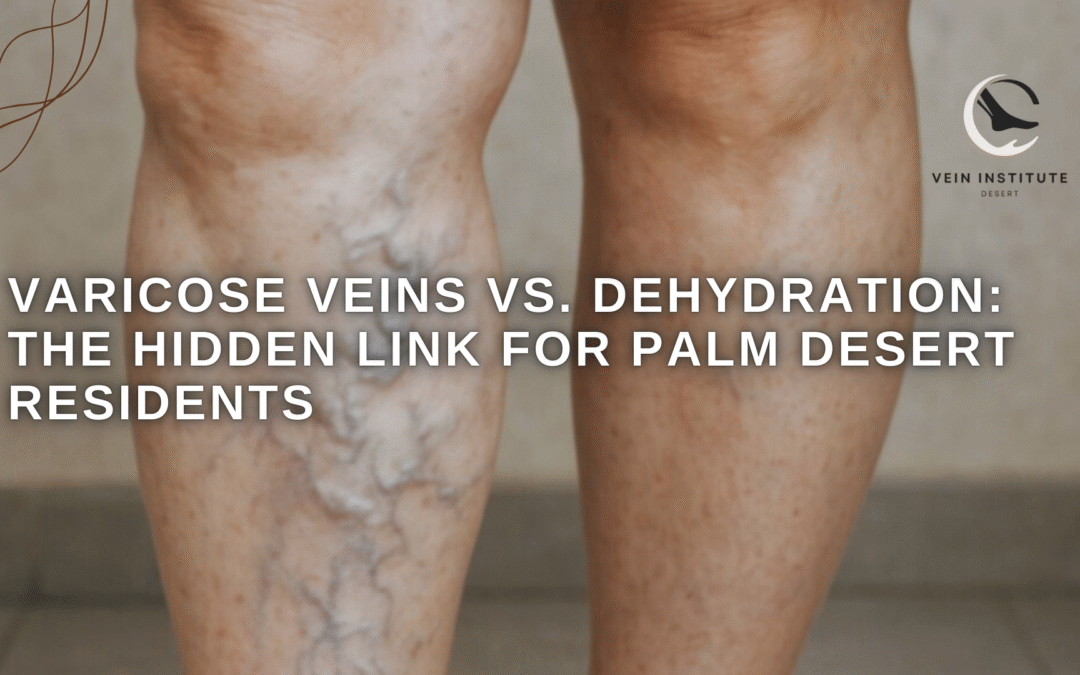
Dehydration and Varicose Veins in Palm Desert 🌵💧
In Palm Desert, heat is not seasonal — it is structural. For much of the year, temperatures climb well above 90°F, and triple digits are not unusual. In this climate, fluid loss is constant, often unnoticed, and frequently underestimated. Many residents believe dehydration only causes fatigue or headaches. In vascular medicine, we see something more subtle — and more serious.
In patients between 40 and 60 with visible vein disease, swelling, or a history of venous ulcers, inadequate hydration can intensify symptoms. Blood becomes more viscous, circulation slows, and already compromised veins struggle further. The connection between dehydration and varicose is not theoretical. It is physiological.
As a phlebologist with years of experience treating chronic venous disease, I regularly evaluate how environmental stressors affect circulation. In the Coachella Valley, hydration is not simply a lifestyle recommendation. It is a vascular necessity.
Varicose Veins vs. Dehydration: The Overlooked Circulatory Stress ⚖️
Varicose veins develop when venous valves weaken and fail. Instead of moving efficiently back to the heart, blood pools in the lower extremities. This leads to venous hypertension — sustained pressure inside the veins.
Now add dehydration.
When the body lacks adequate fluids, plasma volume decreases. Blood thickens. Circulatory resistance increases. For healthy veins, this creates strain. For already compromised veins, it magnifies dysfunction.
Residents living with dehydration and varicose veins may notice:
• Increased leg heaviness in the afternoon
• More pronounced swelling in the ankles
• Heightened aching or throbbing
• Slower recovery after standing
These changes are not coincidental. Thicker blood moves less efficiently through damaged venous valves. Pressure builds more rapidly. Symptoms escalate sooner.
How Desert Climate Amplifies Venous Insufficiency 🌡️
Heat itself causes vasodilation — veins expand in response to high temperatures. While this helps regulate body temperature, it worsens venous pooling in individuals with valve failure.
In Palm Desert, prolonged outdoor exposure, golf, tennis, walking, or even routine errands can lead to fluid depletion within hours. Many adults do not feel thirsty until dehydration is already present.
The combination of dilated veins and reduced plasma volume creates a perfect storm. In patients with chronic venous insufficiency, I often see symptom spikes during peak summer months.
This is where the relationship between dehydration and varicose veins becomes clinically significant. Hydration affects blood viscosity, vascular tone, and inflammatory response — all central factors in venous disease progression.
Signs Dehydration Is Worsening Your Vein Symptoms 🚩
Dehydration does not always present dramatically. In patients with venous disease, the clues are subtle:
🔹 Sudden increase in visible vein prominence
🔹 Tighter sensation in the calves by late afternoon
🔹 More frequent nighttime leg cramps
🔹 Darker urine and dry skin alongside swelling
When hydration improves, many patients report reduced heaviness and better tolerance of prolonged standing. While fluids alone do not cure varicose veins, they reduce one layer of circulatory strain.
Why Hydration Influences Ulcer Risk 🩹
For individuals with advanced venous disease, particularly those with prior ulcers, hydration plays an even larger role. Chronic venous hypertension already impairs oxygen delivery to skin tissues. Dehydration further reduces microcirculatory efficiency.
Inadequate fluid balance can:
• Slow wound healing
• Increase inflammation
• Intensify skin dryness and fragility
• Contribute to thicker, less mobile blood flow
In the desert climate, maintaining consistent hydration is part of protecting skin integrity in patients with venous insufficiency.
Practical Hydration Strategies for Adults Over 40 💧
Hydration recommendations must be realistic. Simply “drink more water” is insufficient advice. For adults managing venous disease:
1️⃣ Begin fluid intake early in the morning, before outdoor exposure
2️⃣ Spread water consumption evenly throughout the day
3️⃣ Increase intake during physical activity or heat exposure
4️⃣ Limit excessive caffeine and alcohol, which contribute to fluid loss
Electrolyte balance may also matter for individuals who sweat heavily. However, sugar-heavy beverages are not the solution. Water remains the foundation.
When patients ask whether hydration alone can reverse varicose veins, the answer is no. Structural valve damage requires medical evaluation. But optimizing hydration reduces symptom burden and supports healthier circulation.
When Vein Symptoms Persist Despite Good Hydration 🏥
If leg swelling, aching, or visible vein enlargement continues even with adequate fluid intake, it is time for a vascular assessment. Persistent symptoms may indicate significant reflux requiring intervention.
At Vein Institute of the Desert in Palm Desert, evaluation focuses on identifying venous insufficiency through duplex ultrasound and developing targeted treatment strategies. Modern minimally invasive procedures can reduce venous hypertension and restore more efficient blood flow.
Hydration supports the system. Treatment corrects the defect.
Circulation in the Desert Requires Strategy 🌴
Living in Palm Desert means respecting the environment. Heat affects the cardiovascular system daily. For those already managing vein disease, the relationship between dehydration and varicose veins is not abstract — it is measurable.
Hydration influences blood viscosity. Heat influences vein dilation. Valve failure influences pooling. Together, they shape symptom intensity.
Adults in midlife often accept leg heaviness as inevitable. It is not. Paying attention to fluid balance, environmental exposure, and early vascular evaluation can significantly improve comfort and long-term outcomes.
Your veins are already working against gravity. In the desert, they should not also have to fight dehydration.
Andy Sharify
The founder and owner of The Vein Institute of the Desert. He oversees the clinic, ensuring exceptional service and a patient-focused approach to vein care. Andy is dedicated to creating a comfortable and supportive environment for every patient.