
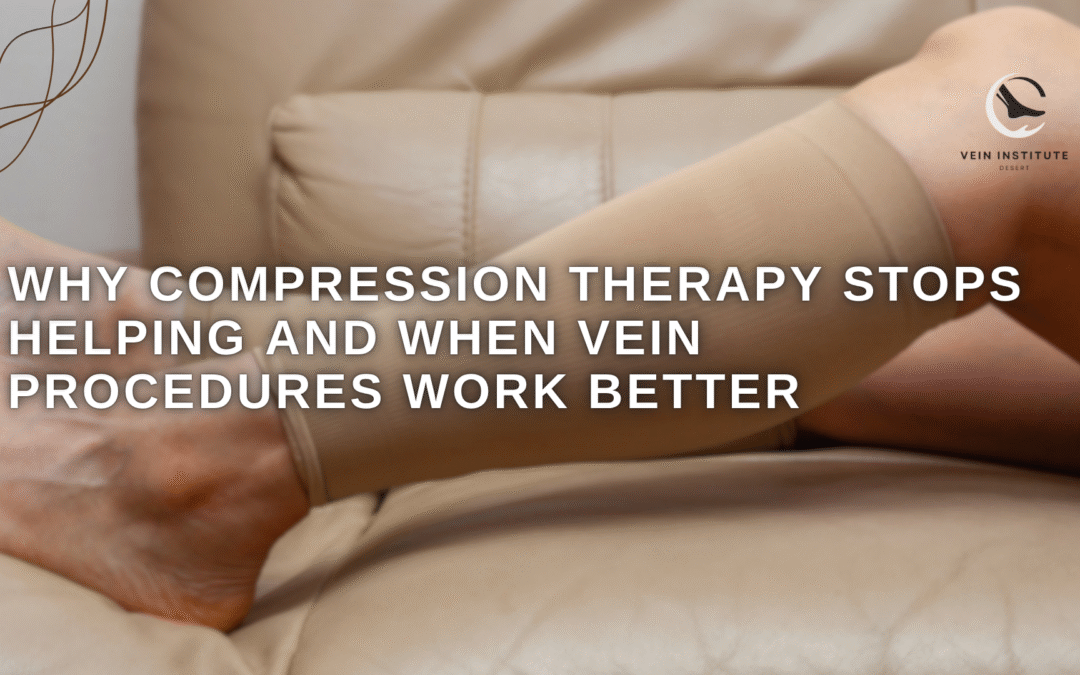
When Compression Therapy Stops Working for Vein Problems 🩺
Compression therapy is often one of the first recommendations for people experiencing circulation-related leg discomfort. It can help manage symptoms by applying external pressure that encourages blood to move more efficiently upward rather than pooling in the lower limbs. For many patients, this provides noticeable short-term relief.
But symptom management is not the same as treating the underlying cause. In some cases, stockings help temporarily while the actual vascular condition continues to progress beneath the surface. That is often when patients begin noticing that the relief they once felt becomes less consistent or disappears altogether.
🔍 How Compression Therapy Helps in the First Place
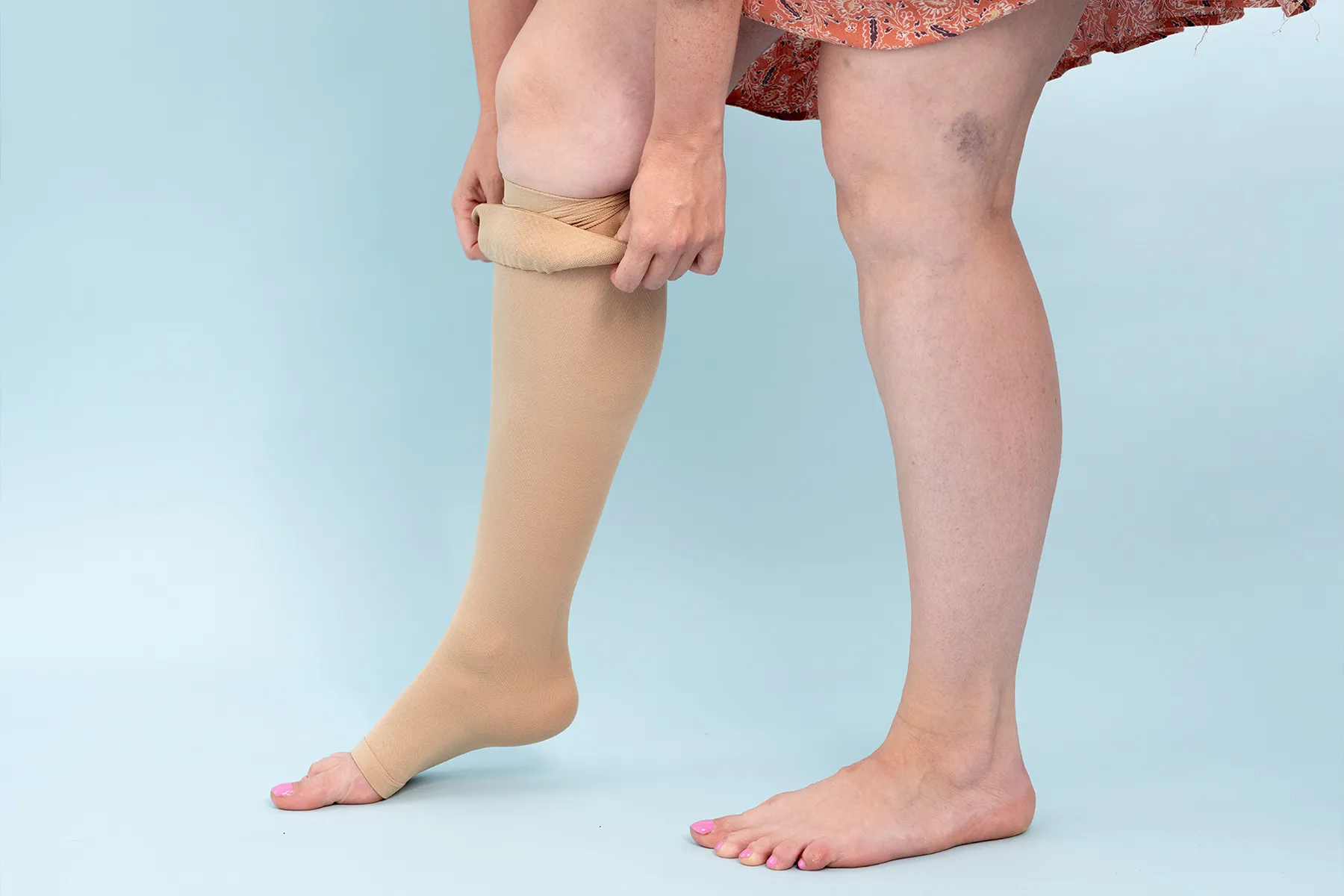
Compression garments work by gently squeezing the legs to support venous blood flow. This external pressure helps reduce fluid buildup, improve circulation efficiency, and ease discomfort associated with poor venous return.
This form of therapy for veins is commonly recommended for people experiencing heaviness, mild swelling, fatigue, or early symptoms of venous insufficiency. It can be especially helpful for those who spend long hours sitting or standing.
⚠️ Why Compression May Stop Providing Relief
Compression does not repair damaged vein valves or correct circulation dysfunction. It helps control symptoms, but it does not eliminate the root problem. If the underlying condition worsens, symptom relief may become less effective over time.
Several factors can contribute to reduced benefit.
Progressive Valve Dysfunction
Chronic venous insufficiency develops when vein valves weaken and allow blood to flow backward instead of efficiently returning to the heart. As this dysfunction progresses, external compression may no longer provide enough support to manage symptoms fully.
Worsening Circulation Problems
As pressure builds inside the veins, symptoms may become more persistent regardless of compression use. Patients sometimes notice that swelling or discomfort returns faster than before, even while following conservative treatment recommendations.
Inconsistent or Improper Use
Relief may also decline if garments are worn inconsistently, fitted incorrectly, or no longer provide adequate pressure. However, even with proper use, some conditions eventually require more definitive intervention.
🦵 Signs Conservative Care May No Longer Be Enough
Symptoms that continue despite compression support may suggest the underlying condition has advanced. Common warning signs include:
- Persistent leg swelling that does not improve consistently
- Heaviness or aching that worsens throughout the day
- Burning, throbbing, or nighttime cramping
- Skin discoloration around the ankles or lower legs
- Enlarged, twisted visible veins
- Skin irritation or early ulcer-related changes
These symptoms are commonly associated with chronic venous insufficiency rather than temporary circulation fatigue.
🩻 When Advanced Vein Procedures Make More Sense
Once the issue moves beyond symptom management, procedural treatment may provide better long-term improvement. Modern vein procedures focus on addressing dysfunctional vessels directly rather than simply controlling symptoms externally.
Minimally invasive approaches can redirect blood flow away from damaged pathways, improving circulation efficiency and reducing the pressure responsible for ongoing discomfort.
This often makes procedural care more effective than indefinite conservative management for appropriate candidates.
💉 Types of Advanced Treatment Options
Treatment depends on the underlying diagnosis and severity of the condition. Options may include image-guided ablation procedures, injection-based therapies, or other minimally invasive vascular interventions designed to improve circulation function.
The right vein treatment is based on medical evaluation rather than symptoms alone, since discomfort can sometimes overlap with other conditions.
🏥 Why Evaluation Matters
Not every patient who wears compression garments needs procedural intervention. But when symptoms persist, worsen, or begin affecting mobility and quality of life, further evaluation becomes important.
Vein Institute of the Desert evaluates circulation concerns using diagnostic assessment to determine whether symptoms reflect progressive venous disease and whether advanced intervention may provide better long-term relief than conservative management alone.
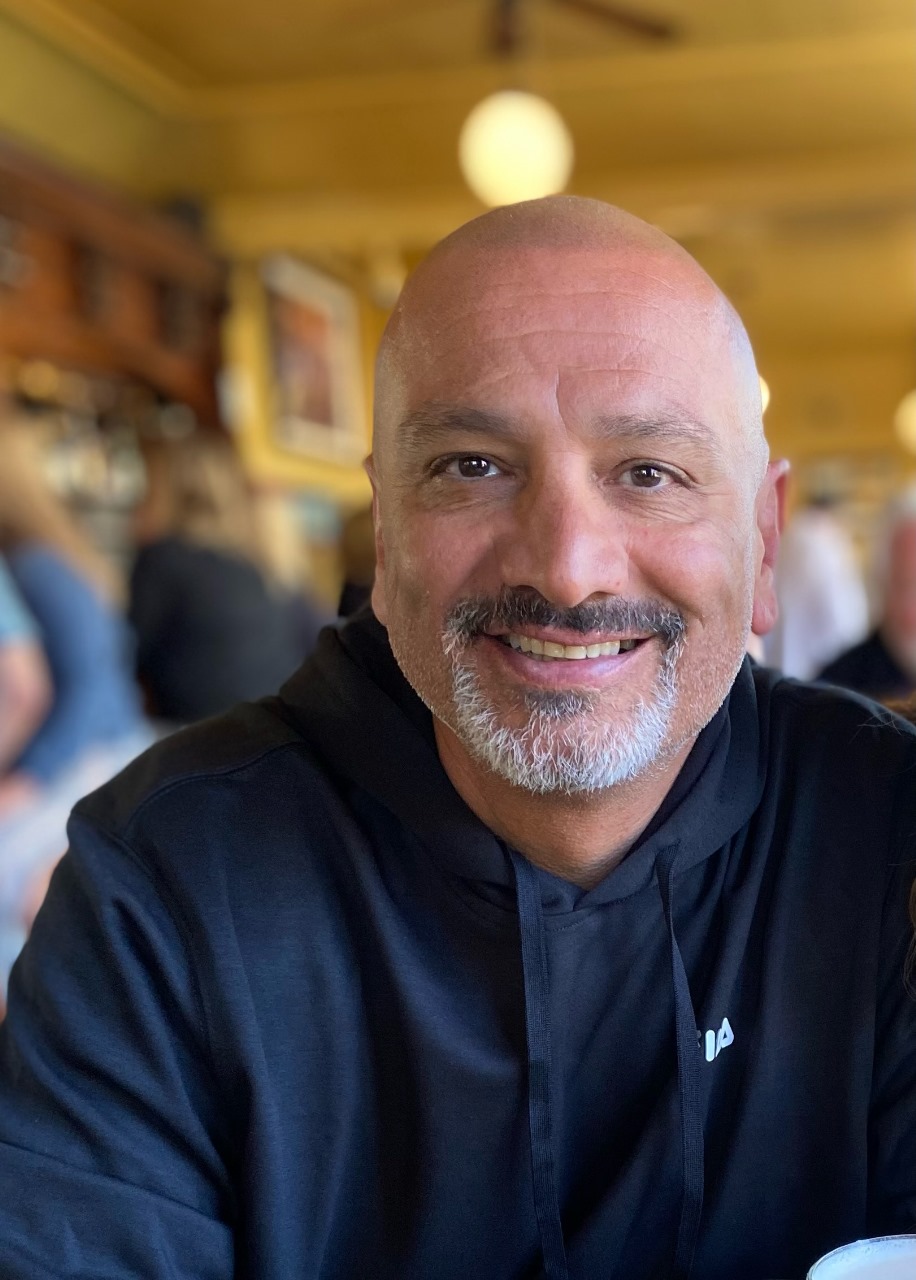
Andy Sharify
The founder and owner of The Vein Institute of the Desert. He oversees the clinic, ensuring exceptional service and a patient-focused approach to vein care. Andy is dedicated to creating a comfortable and supportive environment for every patient.