
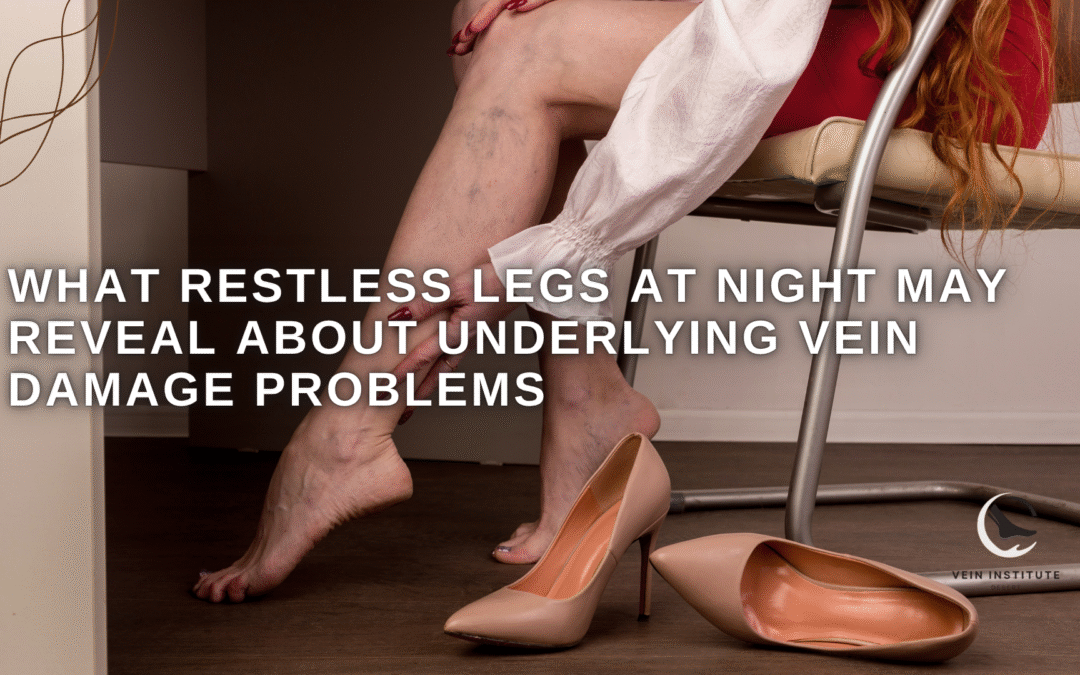
What Restless Legs at Night Reveal About Vein Disease 🌙
Tossing, turning, shifting your legs, or feeling an uncontrollable urge to move them at night can be frustrating and exhausting. Many people assume this nighttime discomfort is simply stress, fatigue, or a sleep-related habit. But in some cases, the real issue may be linked to circulation problems developing beneath the surface.
When blood flow is not moving efficiently through the veins, symptoms can become more noticeable during periods of rest, especially at night when movement slows and circulation patterns change.
🩺 How Poor Blood Flow Can Trigger Nighttime Leg Discomfort
Healthy veins rely on small internal valves to move blood upward toward the heart. When those valves weaken, blood can begin pooling in the lower limbs instead of circulating properly.
This increased pressure may create sensations of heaviness, throbbing, aching, or restlessness that become more noticeable during inactivity. For some individuals, restless legs at night may be connected to underlying vascular dysfunction rather than sleep habits alone.
⚠️ Common Symptoms That May Suggest a Circulation Problem
Nighttime leg discomfort linked to circulation issues often comes with additional warning signs during the day. Symptoms may include:
- Aching or heavy legs after long periods of standing
- Swelling around the ankles or calves
- Burning or throbbing sensations
- Visible enlarged veins
- Cramping that worsens later in the day
- Ongoing leg discomfort without clear muscular cause
When several symptoms appear together, the issue may extend beyond simple fatigue.
🌙 Why Symptoms Often Feel Worse at Night
During daytime movement, walking helps muscles support circulation by pushing blood upward. At night, prolonged inactivity removes that natural assistance, allowing pooling pressure to become more noticeable.
This can make sensations like tingling, restlessness, heaviness, or nighttime leg pain feel more intense once the body is at rest.
🔍 Restless Legs vs Vein-Related Symptoms
Not every case of nighttime restlessness points to a circulation issue. Restless leg syndrome, nerve conditions, mineral deficiencies, and other health concerns can create similar symptoms, which is why proper evaluation matters. However, discomfort linked to venous circulation often follows recognizable patterns. Symptoms may worsen after long periods of standing or sitting, improve temporarily when the legs are elevated, or appear alongside swelling, heaviness, aching, or visible vein changes. When these signs occur together, the discomfort may be related more to impaired blood flow than a purely neurological condition.
🧪 Why Proper Evaluation Matters
Because several conditions can create similar nighttime symptoms, accurate diagnosis is important. Treating the wrong cause can delay relief while the underlying issue continues progressing.
Medical evaluation may include circulation assessment, symptom review, and diagnostic imaging when vascular dysfunction is suspected.
💉 When Vein Disease Is the Underlying Cause
If venous insufficiency is contributing to nighttime discomfort, addressing the circulation problem itself may improve symptoms more effectively than temporary symptom management alone.
Modern treatment options focus on improving blood flow and reducing pressure in damaged veins rather than simply masking discomfort.
⏳ When to Seek Medical Evaluation
Occasional restless sensations after a long day may not be unusual. But persistent nighttime symptoms, especially when combined with swelling, visible vein changes, heaviness, or recurring aching, deserve closer attention.
When vein disease is identified early, treatment is often simpler than waiting until symptoms become more advanced.

Andy Sharify
The founder and owner of The Vein Institute of the Desert. He oversees the clinic, ensuring exceptional service and a patient-focused approach to vein care. Andy is dedicated to creating a comfortable and supportive environment for every patient.