
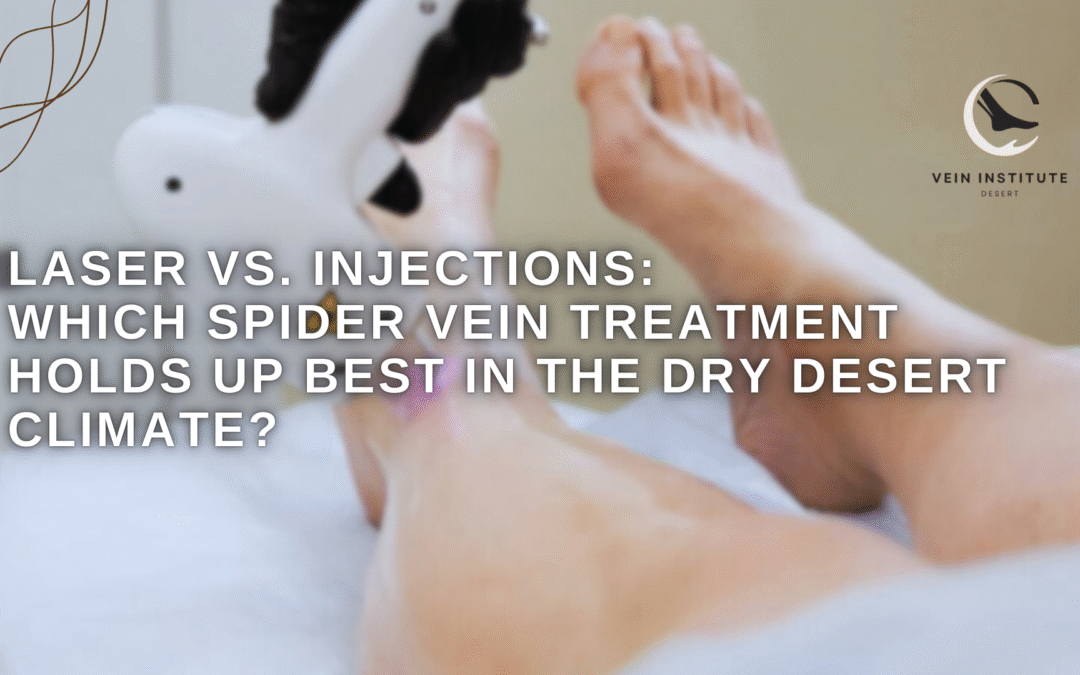
Best Spider Vein Treatment for Dry Climates 🌵🦵
In Palm Desert, the environment shapes more than lifestyle — it influences medical outcomes. Dry air, intense UV exposure, and prolonged heat affect skin integrity, vascular tone, and healing patterns. When patients ask whether laser therapy or injections work better for spider veins in the desert, the answer requires more than a simple preference.
Spider veins are dilated superficial vessels that reflect underlying vascular fragility. Treatment success depends on vessel size, skin condition, circulation, and post-procedure care. In arid climates, these variables shift in subtle but important ways.
For adults between 40 and 60 managing visible veins, choosing the best spider vein treatment means considering not only immediate cosmetic improvement, but durability and long-term vascular stability.
Laser vs. Injections: How Each Treatment Works 🔬
Both laser therapy and sclerotherapy (injections) target abnormal superficial veins, but their mechanisms differ.
Laser treatment delivers concentrated light energy through the skin. The heat damages the vessel wall, causing it to collapse and gradually fade. It is non-invasive and often preferred for very small, fine spider veins near the surface.
Sclerotherapy involves injecting a specialized solution directly into the vein. The solution irritates the vessel lining, leading to controlled closure and reabsorption by the body. It has been the gold standard for decades and is highly effective for slightly larger spider veins and small reticular veins.
From a physiological standpoint, injections address the vein internally, while laser works externally through thermal energy.
Dry Desert Climate and Healing Response 🌡️
Palm Desert’s dry climate influences skin hydration and elasticity. Low humidity can thin the superficial barrier of the skin and increase transepidermal water loss. This matters for laser treatments, which rely on controlled heat passing through the skin to reach the vessel.
In drier skin, light absorption patterns can vary slightly, and post-treatment redness may persist longer if proper hydration and sun protection are not maintained.
With injections, desert conditions primarily influence recovery rather than mechanism. Adequate hydration supports circulation and helps the body clear treated vessels efficiently. However, extremely dry skin may require additional moisturizing to reduce irritation at injection sites.
In clinical experience, both treatments remain effective in desert environments when aftercare is optimized.
Comparing Durability and Outcomes ⚖️
When evaluating durability, several factors determine long-term success:
• Vessel size and depth
• Presence of underlying venous reflux
• Skin quality
• Sun exposure habits
• Genetic predisposition
Sclerotherapy often produces more predictable closure for medium-sized spider veins. Laser therapy can be highly effective for fine, superficial vessels that are too small for injections.
For many patients, a combined approach yields the best aesthetic result.
If underlying venous insufficiency exists, treating surface veins alone may not prevent recurrence. Proper diagnostic evaluation ensures that cosmetic treatment is not masking deeper circulatory dysfunction.
When patients inquire about the Best Spider Vein Treatment for Dry Climates, I emphasize that climate modifies healing, but technique selection depends primarily on vein characteristics.
Advantages and Limitations in Arid Regions 🏜️
Laser therapy advantages:
• Non-invasive
• No needles
• Ideal for tiny facial or ankle vessels
Laser limitations:
• May require multiple sessions
• Slightly higher risk of pigment changes with sun exposure
• Less effective for larger feeder veins
Sclerotherapy advantages:
• High success rate for leg spider veins
• Effective for larger superficial vessels
• Often fewer sessions required
Sclerotherapy limitations:
• Involves injections
• Temporary bruising possible
In desert climates, sun avoidance after either procedure is critical. UV exposure during healing can increase pigmentation changes, especially following laser therapy.
The Role of Sun Protection and Hydration ☀️💧
After treatment, skin protection becomes essential. Patients should:
1️⃣ Apply broad-spectrum sunscreen daily
2️⃣ Avoid peak sun hours during early recovery
3️⃣ Maintain consistent hydration
4️⃣ Follow compression recommendations if advised
These measures improve cosmetic outcomes and support proper vessel closure.
In Palm Desert, consistent sun exposure without protection can compromise results regardless of which technique is used. Long-term durability depends as much on post-procedure habits as on the procedure itself.
When Deeper Veins Influence Surface Results 🩺
Spider veins may represent isolated superficial changes, but they can also signal deeper venous reflux. If heaviness, swelling, or skin discoloration accompanies visible vessels, a duplex ultrasound evaluation is warranted.
Treating deeper reflux first often enhances the longevity of surface treatments. Addressing only cosmetic veins without correcting internal pressure may lead to recurrence over time.
Choosing the Right Approach for Desert Living 🔍
There is no single universal answer to laser versus injections. In dry climates, both modalities remain effective when tailored to vessel type, skin condition, and patient lifestyle.
For fine, superficial veins, laser therapy can deliver precise cosmetic improvement. For larger spider veins, injections typically provide stronger, longer-lasting closure. In many cases, combination therapy produces the most natural and durable result.
The true best spider vein treatment for dry climates is not defined by technology alone. It is defined by individualized assessment, careful technique, and disciplined aftercare in an environment where heat and sun are constant.
Your skin and veins face daily environmental stress in the desert. Selecting the appropriate treatment — and protecting the results — ensures that improvement is not temporary, but sustained.
Andy Sharify
The founder and owner of The Vein Institute of the Desert. He oversees the clinic, ensuring exceptional service and a patient-focused approach to vein care. Andy is dedicated to creating a comfortable and supportive environment for every patient.